
Ramble Travelers contains affiliate links and is a member of the Amazon Services LLC Associate Program and other affiliate programs. If you make a purchase using one of these links, I may receive compensation at no additional cost to you. See my Disclaimer Policy for more information.
9 Best Hawker Foods In Singapore 2025: A Local Food Guide
Updated: Jan 2025
Singapore is known as a food paradise, thanks to its diverse cultural influences and vibrant culinary scene. This small island nation boasts a wide array of delicious dishes to satisfy all tastes.
A great way to dive into Singapore’s local food culture is through hawker foods – affordable and authentic meals found at open-air food centers known as hawker centers.
I am a local foodie, and have most of my meals in Singapore hawker centers and food centers where the street hawkers are now located.
I am always eager to explore varied foods. and I am always discovering new dishes based on recommendations or what I come across in readings.
You’d be surprised by how many stalls I’ve visited in Singapore over the years. Being fluent in local dialects has given me a deeper understanding of the cuisine and preparation methods.
The Singapore hawker food showcase a diverse food culture, offering everything from beloved rice and noodle dishes to a variety of non-rice and non-noodle options.
This guide is all about Non-Rice and Non-Noodle dishes. I’ll introduce you to 9 iconic Singapore street foods and guide you to where you can enjoy the finest versions of each. Just follow my lead. Whether you are a local or a tourist, these Singapore hawker food dishes should definitely be on your must-try list. The best of the Best Singapore Street Food.
By the way, if you are a noodle person, I have a post on 7 of the best noodle dishes in Singapore. The link is at the end of this post.
Update: I have added a new dish, Yong Tau Foo. It’s the perfect choice of food after a long day of walking—delicious, soothing, and wonderfully satisfying. It is listed as the last entry in this post.

9 Best Hawker Foods in Singapore
Non-Rice and Non-Noodle Dishes
Fried Oyster Omelette (Orh Luak)
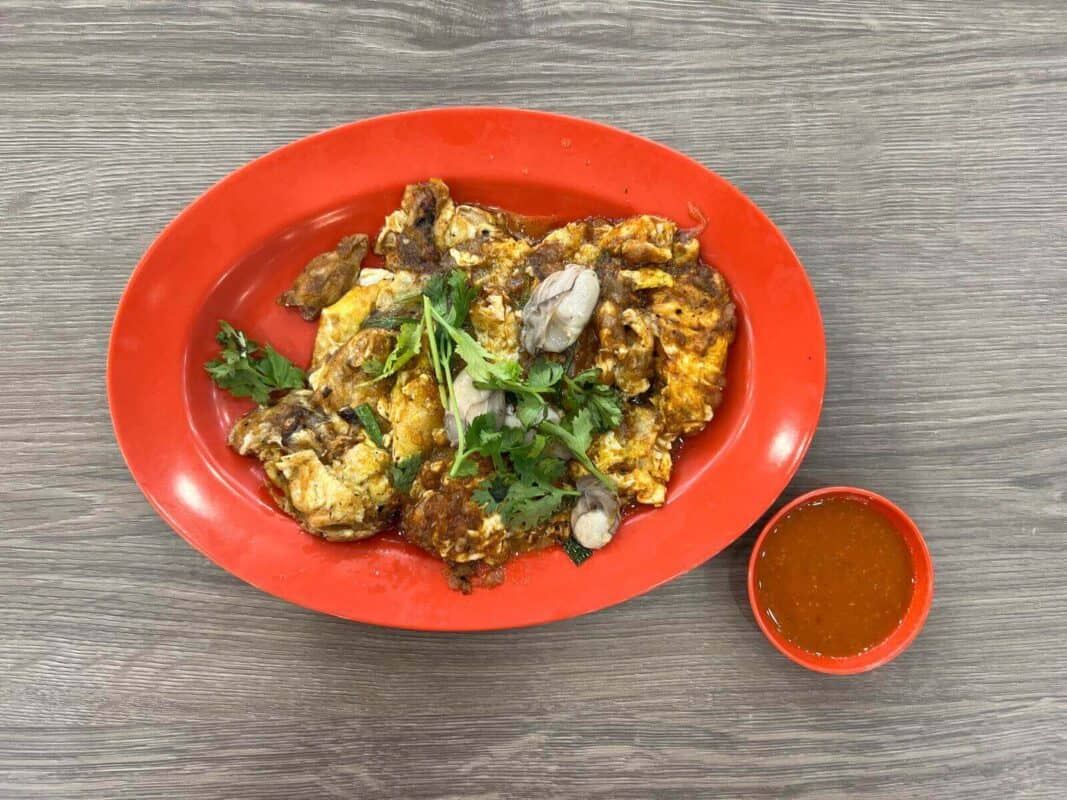
Fried Oyster Omelette, also known as Orh Luak in Hokkien, is a popular street food in Singapore. Made with a batter of potato starch and eggs, this dish is topped with fresh oysters and fried to crispy perfection.
The secret to this dish is achieving the perfect balance between starch and eggs, ensuring the final result has a subtly soft, gooey texture complemented by the eggs. If the starch quantity is insufficient, the dish will resemble a typical omelette.
Sambal chili is added together with a small amount of fish sauce and stirred into the mixture.
A slight amount of the starch is used to fry the oyster, keeping it still somewhat raw, and quickly scooped and served on top of the omelette. Some amount of Chinese parsley and scallion are sprinkled on top for taste.
The oyster omelette is served with a small dish of lime chili sauce for added spiciness, with some tangy taste.
Ramble Travelers Tips: If you prefer the oysters to be fully cooked, just inform the seller. It tastes much better when it is piping hot. Eat it there and not da bao (Singlish for takeaway). Be careful, this food is addictive! This is one of the best hawker foods in Singapore. Absolutely!
Where to eat: 2 of the best Oyster Omelette sellers are:
- Hup Kee Fried Oyster Omeletter: Newton Circus # 01-73, 500 Clemenceau Avenue N.
Open daily except Sunday & Monday, from 6pm to 12 midnight. Price from $6 – $12/plate. - Song Kee Fried Oyster: East Coast Lagoon Food Village #01-15, 1220 East Coast Parkway.
Open daily from 1pm to 1am. Price from $5/plate.
Fried Carrot Cake (Chai Tow Kway)
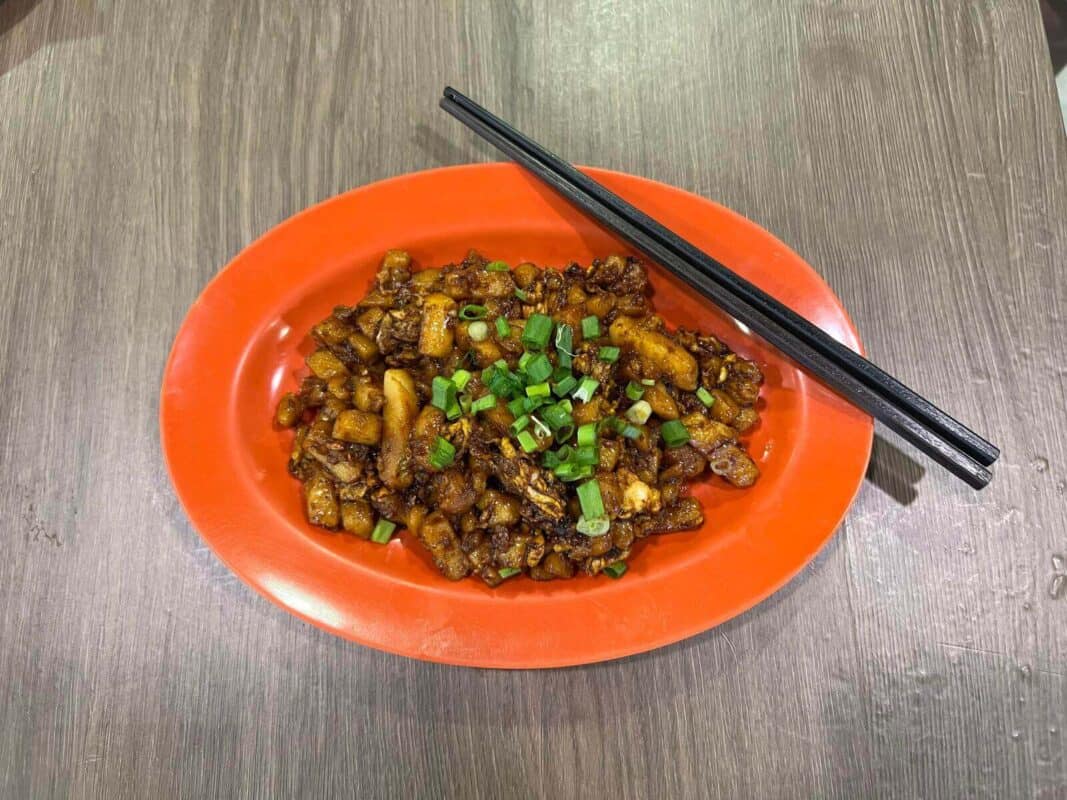
Don’t let the name fool you – this dish has nothing to do with carrots. Fried Carrot Cake, or Chai Tow Kway in Hokkien, is a popular dish made from radish cake, which is steamed and then fried with garlic, eggs, and preserved radish.
This savory dish is a favorite among Singaporeans and can be found in almost every hawker center. It can replace a full meal of rice or noodle.
The dish comes in two versions – black or white. The black version is made with sweet dark soy sauce, giving it a slightly caramelized flavor, while the white version has no sauce and relies on the natural flavors of the ingredients.
Some sellers offer a black & white option, half the portion is black and the other half white. A great way to taste both versions. Either way, both versions are equally delicious, so try both!
Ramble Travelers Tips: Ask for more chili if you like it spicier. If you like to have more eggs in your dish, you can ask the seller to add an extra egg for a small price.
Where to eat: Some popular stalls for Fried Carrot Cake are:
- Father & Son Carrot Cake: Kampung Admiralty Hawker Centre, 02-18, 676 Woodlands Drive 71 Open: Friday to Wednesday (6am to 2pm, 4.30pm to 8pm). Price from $3/plate.
- Forty One: 121 Pasir Panjang Rd, #01-41
Open daily from 10am to 8pm. Price from $4 /plate. This seller serves a great black version.
Popiah (Spring Roll)

Popiah is a fresh spring roll filled with a variety of vegetables and sometimes shelled cooked prawns. It is a popular dish in Singapore’s Chinese community and can be found at most hawker centers.
A combination of sambal chili sauce, smashed garlic paste, sweet soy sauce, and ground peanuts are spread evenly over the thin rice flour skin. The filling usually consists of turnip, bean sprouts, lettuce, Chinese parsley, boiled egg, pieces of fried eggs, broken peanuts, and slices of cooked prawns are added over the spread and rolled into the finished spring roll.
Most spring rolls are sold fresh. Some sellers also offer a deep fried version. I personally prefer the fresh version as it is healthier.
It is normally served with a sweet and sour brown sauce, or sometimes sweet chili sauce.
This dish is not only delicious, but also healthy and perfect for vegetarians (served without the eggs and prawn). It is a great option for those looking for a light and refreshing meal (need 2 rolls to be full).
Ramble Travelers Tips: Some hawkers provide the option to add extra ingredients such as prawn, tofu or crab meat at an additional cost.
Where to eat: 2 popular Popiah sellers are:
- Old Long House Popiah: 22 Lorong 7 Toa Payoh, Kim Keat Palm Market & Food Centre, #01-03
Open daily except Monday & Tuesday (6:30am to 2:30pm). Price from $2.00/roll. - Ann Chin Popiah: 335 Smith Street, Chinatown Complex Market & Food Centre, Stall #02-112
Open daily from 8am to 7pm. Price from $2.00/roll.
Satay

Satay is a must-try dish in Singapore, and can be found at almost every hawker center or food court. It consists of small pieces of chicken, beef or lamb marinated in a mixture of spices, and then skewered onto bamboo sticks. The skewers are then grilled over hot charcoal and served with sweet & spicy peanut sauce made with coconut milk, chili, and some spices.
The meat is served with fragrant rice cakes (called ketupat), sliced cucumbers, and onions. Some stalls serve generous servings of Achar (vegetable pickle) to complement the satay.
Satay appears in a myriad of versions, each with a distinct flavor profile. Within the local culinary landscape, Malay Satay stands out as the most vibrant and spicy variant, earning it the title of the most favored satay selection.
No matter which version you choose, satay is a must-try dish that will satisfy your taste buds with its tender meat and flavorful sauce.
Ramble Travelers Tips: For the best satay experience, try to find a hawker who grills their satay on real charcoal for that smoky flavor. Also, be sure to dip your satay in the sauce before each bite for maximum flavor.
Satay is sold by the stick. For a group of 3 persons, I would suggest ordering 35 sticks and 4 ketupats. This should suffice, and you can always order more if needed.
Do not forget to inform the seller of the type of meat you prefer. You can order a mix of different meats.
Where to eat: 2 popular Satay sellers are:
- Chomp Chomp Satay Stall: Chomp Chomp Food Centre #01-34, 20 Kensington Park Road
Open daily from 4pm to 12am. Price from $0.80/stick. - Haron Satay: 1220 East Coast Parkway, East Coast Lagoon Food Village Stall 55
Open daily from 2pm to 11pm (Tue to Fri) and 11am to Midnight (Sat & Sun). Price from $0.60/stick.
Rojak

Rojak is a traditional fruit and vegetable salad that is very popular in Singapore and can be found in many hawker centers and food courts.
It is a mix of different fruits and vegetables, such as cucumber, bean sprouts, turnip, tofu, deep-fried dough fritters, and fruits including slices of apples, guava, mango, all tossed with a thick sweet tangy and spicy peanut sauce made with fermented prawn paste (belacan), sugar, tamarind juice and sambal chili.
Ground peanuts are generously sprinkled on top of the dish for that extra crunchy texture.
The flavors are an explosion in your mouth – sweet, sour, and spicy all at once. The sweet pineapple balances out the spicy sauce, making it a refreshing snack on a hot day.
Some versions of Rojak also include cuttlefish or jellyfish for added texture and flavor.
Ramble Travelers Tips: The prawn paste can leave a lingering taste in your mouth. A good drink to pair with rojak is sugarcane water with a twist of lime, or fresh coconut water.
Where to eat: 2 popular Rojak sellers are:
- Singapore Famous Rojak: 270 Queen Street, Albert Centre Market & Food Centre #01-45
Open Wed-Sun 1pm to 8:30pm. Price from $3/plate. - Balestier Road Hoover Rojak: Block 90 Whampoa Drive, #01-06
Open Wed-Sun from 10am to 4pm. Price from $4/plate.
Roti Prata

Roti Prata is a popular Indian dish that has become a staple in Singapore’s food culture. It literally means flat bread.
It is made from dough that is flipped and stretched before being fried on a flat grill. The result is a crispy and flaky pancake-like bread that can be eaten plain or filled with various ingredients , including egg, cheese, onion, banana, mushroom, chicken, mutton or even chocolate, creamy milk, and red bean.
The plain roti prata is also known as “Kosong Prata” meaning empty.
Adding egg and onion adds taste to the otherwise bland bread.
It is usually served with a side of fish or mutton curry for dipping. This dish can be enjoyed anytime of the day, be it breakfast, lunch, dinner or supper. Pair this dish with Kopi or Tea Tarik.
Ramble Travelers Tips: I prefer roti prata that is crispy and fully cooked and not soft and starchy. Many stalls prepare a large amount of prata in anticipation of the crowd. However, a savvy tip for enjoying freshly fried prata is to request the addition of onions or eggs. This guarantees they’ll prepare your prata fresh to order.
Where to eat: 2 popular Roti Prata sellers are:
- Mr and Mrs Mohgan’s Super Crispy Roti Prata: 300 Joo Chiat Road.
Open daily from 6:30am to 1:30pm except Wed (closed). Price from $1/piece for Kosong Prata. - Spring Leaf Prata Place: 396 Upper Bukit Timah Road, The Rail Mall
Open daily from 11pm to 10:30pm. Price from $1.40/piece for Kosong Prata.
Bak Kut Teh (Pork Ribs Soup)
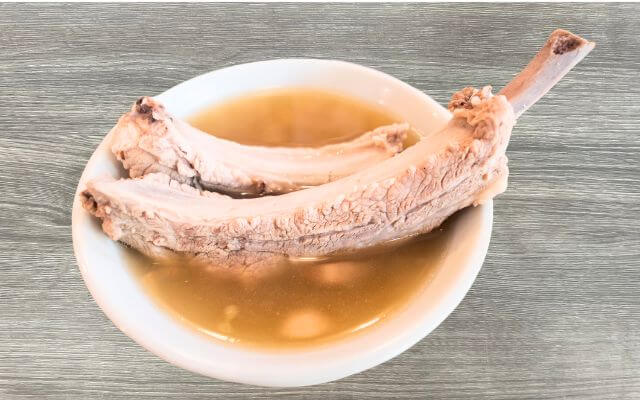
Bak Kut Teh is a popular Chinese soup dish that translates to “pork bone tea” in English. The soup is made by simmering pork ribs in a broth of herbs and spices such as garlic, star anise, cinnamon, cloves, fennel seeds, and peppercorns, plus some Chinese medical roots and dong quai.
The result is a flavorful and fragrant soup with tender meat falling off the bones.
It is typically served with a side of steamed white rice or soup or dry mee sua (thin wheat vermicelli) and accompanied by various condiments such as dark soy sauce, chopped red chilies, minced garlic, and fried dough fritters.
Despite its name, there is no tea in the dish. The word “tea” refers to the Chinese tradition of drinking tea alongside a meal for digestion purposes.
Ramble Travelers Tips: Bak Kut Teh is traditionally eaten for breakfast, but many stalls now offer it throughout the day. If you prefer, you can ask for more fried dough fritters and forego the rice or mee sua. Dip the fritters into the soup for extra taste.
Where to eat: 2 popular Bak Kut Teh sellers are:
- Song Fa Bak Kut Teh: Suntec City, #B1-132 Fountain Court, 3 Temasek Boulevard
Multiple locations including Jewel Changi Airport. Click for locations.
Open daily from 11am to 9pm. Price from $8/bowl. - Founder Bak Kut Teh: 347 Balestier Road.
Open daily from 11:45am to Midnight, except Tuesday (closed). Price from $9.80/bowl with long premium ribs.
Singapore Chili Crab
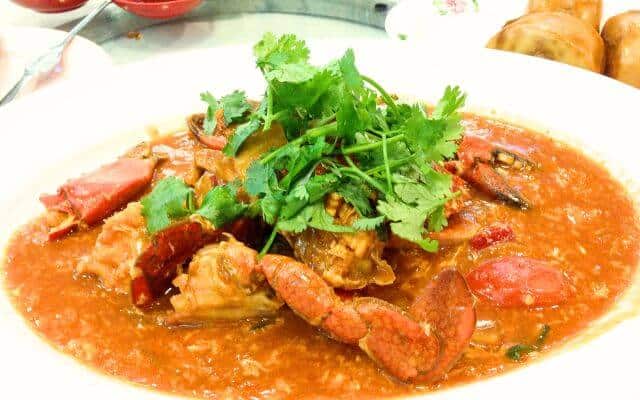
A trip to Singapore is not complete without trying the iconic Singapore chili crab. This dish is a local favorite and can be found in most seafood restaurants on the island. It is labeled a “must-try” dish in Singapore.
The dish features a whole crab cooked in a thick, tangy, sweet and spicy tomato-based chili sauce with hints of ginger and garlic. Some soy sauce is used for the umami flavor. Eggs are added to the sauce, making it silky and slightly thickened texture that clings to the crab.
The crabs are typically served whole but can also be cut into smaller pieces for easier consumption.
The dish is typically served with deep-fried mantou (Chinese buns) for dipping or to soak up the flavorful sauce. One of the many joys of eating this dish is the dipping of the fried mantou and savoring the taste, lingering in your mouth. I love this taste to the moon.
Ramble Travelers Tips: Be prepared to get messy! Eating chili crab requires some effort as you need to crack open the shells to get to the meat. Some restaurants will provide bibs and/or gloves, but it’s always good to bring your own wet wipes just in case.
Ask for a seafood cracker to help with the cracking of the crab claws.
Always inquire about the price if it’s not listed on the menu, as chili crab is usually sold by weight.
Where to eat: 2 popular Chili Crab sellers are:
- Jumbo Seafood: Multiple locations including Dempsey Hill Block 11, Dampsey Road, #01-16. Click for other locations.
Open daily from 11am to 2:30pm & 5:30pm to 10:30pm. Price from $11.80 per 100g of crab (seasonal price), $0.80/mantou. - Momma Kong’s: 34 Mosque Street.
Open Tues-Fri 5pm to 10:30pm, Sat-Sun 11am to 10:30pm. Price from $58++
Barbecue Stingray

Barbecue stingray, also known as “sambal stingray,” is a must-try dish for seafood lovers. It is a popular street food that can be found in hawker centers and food courts all over Singapore.
The dish features a thin slice of stingray meat marinated in a blend of spices and topped with sambal chili paste, which is a spicy mix of chili, garlic, shallots, ginger, belachan shrimp paste and other ingredients.
The stingray is then wrapped in banana leaves and grilled over charcoal until cooked and charred. The result is a tender and flavorful meat with a slight smoky taste, featuring lots of charred, moist meat with a savory sambal sauce.
The dish is typically served atop a banana leaf, with lime wedges to add some tanginess, sprinkle of onions, as well as cucumbers for a refreshing crunch, and a small serving of chinchalok (fermented tiny shrimps with shallots, chili, and lime).
Gently peeling back revealed the beautifully parallel strands of meat, tender enough to separate easily yet each fiber retained enough texture to avoid breaking apart too quickly. That is a perfectly barbecued stingray!
It is best enjoyed with a side of white rice to balance out the spiciness.
Ramble Travelers Tips: Pair Barbequed Sambal Stingray with a bottle of cold beer. A match made in heaven!
Be adventurous and try other types of seafood wrapped in banana leaves such as squid or prawns. These dishes are equally delicious and worth trying.
Where to eat: 2 popular Barbecue Stingray sellers are:
- Hai Wei Yuan BBQ: 20 Kensington Park Road, Chomp Chomp Food Centre #01-01.
Open daily from 5pm to Midnight, except Monday (Closed). Price from $12/serving. - Star Yong Kwang Seafood: 120 Bukit Merah Lane 1, #01-04 Alexandra Village Food Centre
Open daikly from 3pm to 9:45pm. Price from $18/serving.
Yong Tau Foo
This is a new addition to the nine food options mentioned earlier. Yong Tau Foo is both a beloved staple and a comforting dish for many. I simply had to include it because it’s the perfect choice after a long day of walking—delicious, soothing, and wonderfully satisfying.
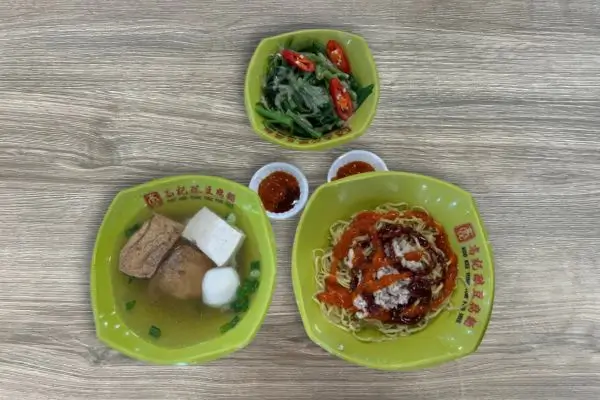
Yong Tau Foo is a beloved Chinese dish featuring tofu and an assortment of vegetables—such as bitter gourd, okra, peppers, eggplants, and mushrooms—stuffed with a flavorful mixture of meat or fish paste.
This versatile dish can be enjoyed two ways: as a light and comforting soup or served dry with a rich, savory sweet bean sauce. When served dry, the soup is provided on the side, complementing the flavors perfectly.
Ramble Travelers Pro Tips: The better way to enjoy this dish is by ordering the set meal. It includes a bowl of Yong Tau Foo, served either dry or with soup, alongside a bowl of specialty egg noodles topped with flavorful minced chicken, and a side of Kang Kong (morning glory) drizzled with fermented bean curd sauce.
They are served alongside sweet bean sauce and chili sauce creating a flavorful and perfectly balanced meal.
Note: The noodle included in this meal set is optional. You can always order without the bowl of noodle (disclaimer: this is a non-rice and non-noodle post).
Where to eat: They have many outlets in Singapore. Two of these are:
- Koo Kee Yong Tow Foo Mee: Tang Plaza, 310 Orchard Road, #B1-K13
Open daily from 10:00am – 10:00pm. Price from $5 – $10 per pax. - Koo Kee Yong Tow Foo Mee: People’s Park Complex Food Centre
32 New Market Road #01-1114.
Open daily from 10:00am – 10:00pm. Price from $5 – $10 per pax.
Where To Eat
In this guide, I have meticulously curated dining recommendations for each dish, drawing upon personal experiences where the taste and quality stood out as exceptional.
Nevertheless, I understand that for tourists, finding these locations can sometimes present a challenge.
The great news is that these delightful dishes can be found across numerous renowned hawker centers and food courts throughout Singapore. Five of these notable culinary hubs are conveniently reachable via MRT or bus:
- Lau Pa Sat @18 Raffles Quay. (Nearest MRT Station: Raffles Place. 5 min (350.0 m) walk to Lau Pa Sat via Market St.
- Maxwell Food Centre @1 Kadayanallur Street (Nearest MRT Station: Tanjong Pagar MRT Station. 6 min (450.0 m) walk to the food centre via Peck Seah St and Maxwell Rd.
- Amoy Street Food Centre @7 Maxwell Rd (Nearest MRT Station: Tanjong Pagar MRT Station. 4 min (290.0 m) walk to the food centre via Telok Ayer St.
- East Coast Lagoon Food Village @ 1220 East Coast Parkway (Nearest MRT Station: Bedok MRT Station. Take a taxi from there to the Food Village, which costs around $6-$8. Buses are available from Bedok Bus Interchange take bus number 196 or 197).
- Newton Food Centre @ 500 Clemenceau Avenue N. (Nearest MRT Station: Newton MRT Station. 3 min (500.0 m) walk to the food centre via Clemenceau Ave N.
Final Thoughts
There you have it, a comprehensive guide to 9 Best hawker foods in Singapore focusing on Non-Rice and Non-Noodle Dishes. These 9 savory selections (including the lastest addidtion – 10) that you must try on your Singapore visit.
There is always a new food adventure waiting for you in Singapore! Don’t be afraid to try new dishes and explore the diverse food culture in this city-state. Singapore food street are all over the island.
Note: This is not an exhaustive list of hawker foods in Singapore, as there are many more delicious foods out there waiting to be discovered. These are just some of our personal favorites and recommendations for travelers looking to experience the best of Singapore’s street food scene.
We believed we have chosen the best Singapore street foods as your local food guide.
Alternative:
A easy way to explore street food in Singapore is to join a guided food tour and explore the best of Singapore’s UNESCO hawker culture. Click here Singapore Guided Street Food Tour At Night.
You gonna love this .. 10 Tastings of 3 Cultures
Discover Singapore’s vibrant street food scene on a private tour. Taste local dishes like “teh tarik” and “rojak” while exploring cultural hotspots such as Kampong Glam, Little India, and Chinatown. Enjoy a customizable experience tailored to your dietary preferences! Click on the booking below!
FAQ
What is the famous food market in Singapore?
The famous food market in Singapore is Lau Pa Sat aka Telok Ayer Market.
Nestled at the heart of Singapore’s Central Business District, Lau Pa Sat stands out as the city’s most captivating hawker centre. Recognized as a national landmark, this venue is distinguished by its 19th-century colonial architecture, adorned with wrought iron detailing and majestic Victorian arches.
What is the number one food in Singapore?
The number one food in Singapore is Chicken Rice
Regularly referred to as Singapore’s national dish. The rice is cooked in chicken stock, ensuring a burst of flavor with every bite. Go for the steamed chicken option, served with thick sweet soy sauce, chili and ginger.
What’s your favorite hawker center food?
My favorite hawker center food is oyster omelette.
Followed by satay, rojak, popiah, chili crab, and carrot cake.
What is typical Singapore food that every Singaporean knows?
The typical Singapore food that every Singaporean knows must be Chay Kway Teow, Hokkien Mee, Popiah, Hae Mee, Satay, Rojak, Fried Carrot Cake, Oyster Omelette, Bak Kut Teh, and Kway Chap.
These foods are available in the hawker centres and food centres in Singapore.
What is the difference between oyster egg and oyster omelette?
An oyster egg is essentially a fried egg that’s slightly crispy around the edges with oysters scattered on top. On the other hand, an oyster omelette combines eggs with sweet potato flour, giving it a distinctively starchy texture.
Resources
I’ve written a post about the top seven noodle dishes in Singapore that you might find intriguing. If you’re visiting Singapore, sampling these dishes could be a delightful experience. To discover more about these exquisite noodle varieties and where to find the best stalls serving them, click on “7 Must-Try Singapore Street Noodles.”
If you’re someone with a penchant for sweets, Singapore will feel like paradise. The dessert scene here is unparalleled, offering an array of choices like Chendol, Bubur Cha Cha, Cheng Tng, Orh Nee, and many more, leaving you spoiled for choice. For those eager to dive into the richness of Singapore’s dessert culture, this article detailing the top 9 Singapore Desserts is a must-read.
If you are planning for your first trip to Singapore, you may want to read these two articles to familiarize yourself with Singapore and maximize your stay in Singapore.
15 Things to know before visiting Singapore
17 Interesting facts about Singapore