
Ramble Travelers contains affiliate links and is a member of the Amazon Services LLC Associate Program and other affiliate programs. If you make a purchase using one of these links, I may receive compensation at no additional cost to you. See my Disclaimer Policy for more information.
Things To Know Before Visiting Singapore | 15 Exposed
Updated 09 April 2026
⚠️ Travel Update (Effective April 15, 2026): Power Bank Rules for Singapore Flights
From April 15, 2026, passengers departing Singapore are limited to carrying a maximum of two power banks in their hand luggage. This applies to all power banks, including those up to 100Wh and those between 100–160Wh (which require airline approval).
Any extra power banks must be disposed of before boarding.
👉 Tip: Always check with your airline for any additional restrictions before you fly.
Essential Things to Know Before Visiting Singapore
Singapore isn’t just a place you stop over. It’s where every street has its own fascinating story, where different cultures blend smoothly, and where you see the traditional and modern side by side. Get ready to be amazed by Singapore’s rich and colorful mix, and experiences that will capture your heart.
This article highlighting the 15 Things to Know Before Visiting Singapore, is packed with vital info and insider tips to ensure your trip to Singapore is smooth and super enjoyable. As someone from Singapore who travels often, I’m here to prep you well before your flight, sharing local insights and experiences, so you can have the best time exploring my home.
Whether you are a first time visitor to Singapore, or you came, love the place and are returning for more – here are all the 15 things to know before visiting Singapore.
Anticipate receiving practical advice including laws in Singapore, advice on weather, local customs, do’s and don’ts in Singapore, and some lesser-known information that could significantly impact your holiday experience.
- Singapore Immigration Requirements
- Singapore Custom Clearance
- Weather in Singapore
- Best time to visit Singapore
- What to wear in Singapore
- What to pack for Singapore
- SIM Cards and Wifi in Singapore
- Languages in Singapore
- Money and Cost in Singapore
- Singapore Tourist Refund Scheme
- Transport in Singapore
- What to eat in Singapore
- Is Singapore Safe to Visit: Health and Safety
- Understanding Singapore’ Cultures
- Singapore Laws tourists should know
The goal is to equip you with all the necessary details, so that you can have a seamless and delightful experience during your stay, without encountering any unexpected challenges or surprises.
Singapore Immigration Requirements – Navigating Visa and Entry Protocols
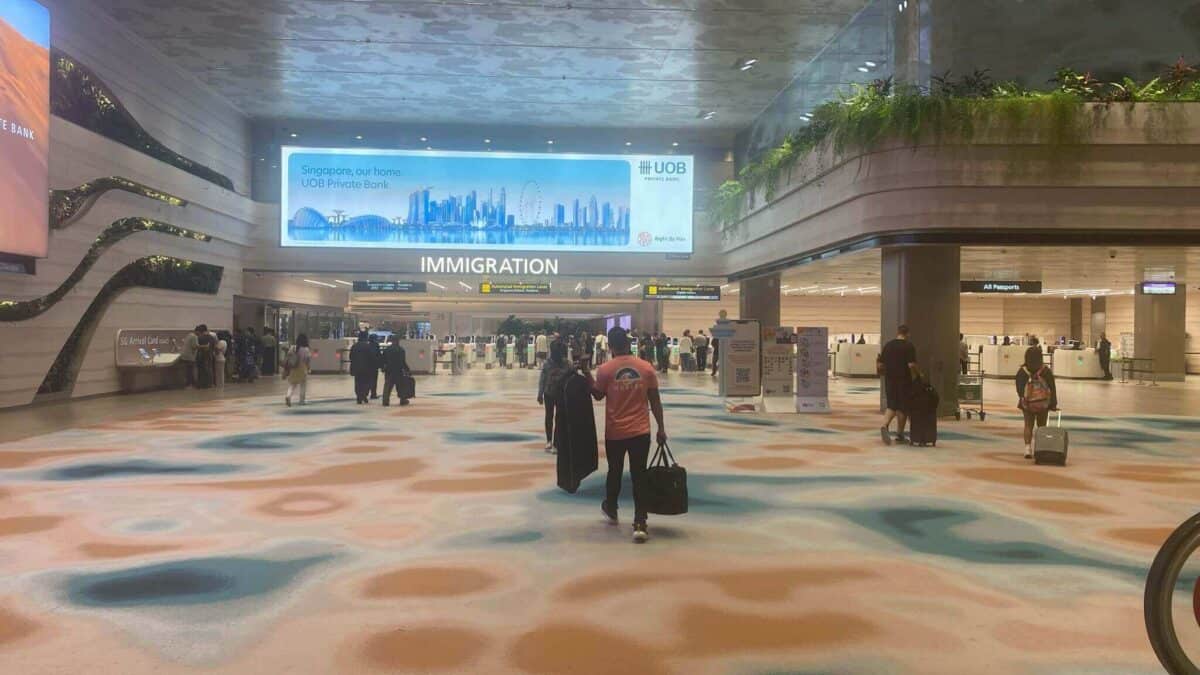
Before setting foot in Singapore, familiarizing yourself with the visa protocols can ensure a seamless arrival. Depending on your nationality, you may need to secure a visa in advance.
VISA
If you are a passport holder of the United Kingdom, United States of America, European Union Citizens, Switzerland, Norway, Australia, New Zealand and South Korea, you do not need to apply for a visa to enter and stay in Singapore for up to 90 days.
Canadians are allowed 30 months visa free stay.
Starting from 9th February 2024, travelers holding ordinary passports issued by the People’s Republic of China will no longer require a visa to stay in Singapore for up to 30 days.
Use the Immigration & Checkpoints Authority’s official website to verify if your country is exempt, qualifies for a visa on arrival, or requires a pre-arranged visa.
SG Arrival Card
All travelers are required to submit the SG Arrival Card (with electronic health declaration) before arriving in Singapore, except those who are transiting through Singapore without the need to clear immigration. Or you are coming in through land checkpoints including Woodlands and Tuas Checkpoints.
You are required to submit within 3 days before your arrival in Singapore (including the day of arrival). You can submit online at SG Arrival Card. This service is free.
So, remember, if you are arriving in Singapore by air or sea, you MUST submit the SG Arrival Card within 3 days of your arrival. This SG Arrival Card is not a Visa!
Always keep your passport valid for at least six months beyond your stay.
Covid-19 Matters
Singapore welcomes all travelers without quarantine or testing requirements, regardless of their COVID-19 vaccination status. However, if you are unwell or experiencing any COVID-19 symptoms, please consult a doctor and wear your mask. You owe it to yourself and fellow travelers!
Singapore Customs Clearance
Singapore maintains relatively strict customs regulations, including a list of prohibited items such as weapons, drugs, offensive materials, chewing gum (except dental and medicated gum), firecrackers, and explosive canisters. These items are not allowed to be brought into Singapore.
According to Singapore’s regulations, individuals entering the country must declare and pay duty and Goods and Services Tax (GST) for dutiable and taxable goods that exceed their duty-free concession and GST relief. This applies to goods bought overseas and in Singapore.
To check what goods to declare for entering Singapore, you can refer to Singapore Customs declaration and payment of taxes.
Please be aware that Singapore has strict regulations regarding the import of prohibited narcotics. Violation of these laws can lead to severe consequences, including the death penalty.
On one of my trips back from Indonesia years ago, I unintentionally brought a small 6-inch night stick in my baggage. Unbeknownst to me, this “stick” is considered a “weapon” and is prohibited in Singapore. As a result, I was recorded for bringing this item into Singapore and it was confiscated.
Be careful what you bring into Singapore as the penalties are severe.
Weather in Singapore
Singapore’s climate is hot and humid all year round due to its location near the equator. The average temperature ranges from 25° C to a high of 33° C. The relative humidity averages 85%.
Throughout the year, there are minimal fluctuations, except during the wet seasons when rainfall reaches its peak from November to February. While temperatures vary, the hottest period typically falls between April and June.
You’ll feel the heat, sweat, and stickiness. Even for us locals, the weather can be tiring, and we tend to slow down. Stay hydrated by drinking plenty of fluids. If you’re walking outdoors, bring a water bottle and maybe a small towel for cleaning up.
Luckily, most indoor places are air-conditioned, providing a refreshing escape from the heat. It’s the perfect opportunity to find solace and for that long tall cold coconut water.
Best Time to Visit Singapore
In a nutshell, you do not need to be overly stressed with the details of all the factors on when it is best to visit. Just remember the high tourist season is December to April, and the low season is from July to October. Anything that comes in between, be it rain or shine, is part of the fun and challenges.
If you agree with the above, you can simply ignore the following details below:
Exploring Singapore is like embarking on an adventure. Despite the rainy season approaching towards the end of the year, it coincides with the festive holiday season of Christmas, New Year., and school year end vacation in Singapore and the region. It is also the high season for tourists and holiday makers.
To avoid heavy rainfall, it is better to steer clear of November to February and July to September. However, doing so means missing out on the holiday celebration, especially for the year end.
If you prefer a less crowded period, then July to October may be right for you.
What to wear in Singapore
It is best to wear light and comfortable clothing in Singapore. For your casual day outing and touring the city, T-shirts, shorts, and slippers or sneakers are fine. That is what we usually wear roaming the city.

Unless otherwise specified by the establishment, most cafes, restaurants, and social places are generally accepting of casual attire. In my opinion, if one place has a dress code that doesn’t align with your style, simply move on to the next. After all, you’re on holiday, and that’s the name of the game.
Certain locations undoubtedly warrant a more formal attire, such as places of worship, upscale restaurants, or government offices.
What to pack for Singapore
- Sneakers or comfortable walking shoes. Singapore has plenty of walking area, from five foot way to malls and outdoors. You can basically walk the whole day. Singapore is a very walk-able city.
- Shorts, skirts, cotton tops, t-shirts, short sleeve shirts, light trousers and/or jeans. You will perspire a lot outdoors, so bring those cotton attires. Think summer essentials.
- Wind breaker, a poncho for raining day, a cap or hat, umbrellas.
- A shawl or a sarong to cover bare shoulders or legs should you plan to visit religious sites, such as temples. (Respecting cultural norms, and this includes dressing modestly when visiting religious sites).
- Small face towels, for those occasional times you need to wipe down while roaming the city.
- A light backpack to carry your personal belongings and gadgets when you are out exploring the city.
- Your personal effects including personal medications, credit cards and others. There are rules on bringing personal medication into Singapore.
- Leave those prohibited items, such as vaporizer and weapon look-alikes at home.
Pack efficiently. However, should you forget something or the need arise for some essentials, you can always buy it in Singapore. Convenience stores, supermarkets and retail outlets are everywhere in Singapore.
SIM Cards and Wifi in Singapore
SIM Cards
Prepaid SIM cards are easily purchased on arrival at the Changi Recommends booths in Changi Airport. You can also purchase from any of the telco retailers and convenience stores, such as 7-Eleven or similar kiosks. You can now buy prepaid SIM cards with data-plan at extremely affordable prices. The three top local service providers are SingTel, M1, and StarHub.

Prepaid Tourist SIM cards are relatively inexpensive in Singapore. If you are staying for less than 2 weeks in Singapore, SIN$12 will get you 100GB of data with 500 local mins and 3GB of data roaming should you plan to travel to Malaysia or perhaps Indonesia for your next destination. How good can that be!
Another alternative is eSIM which I have used during my last few trips to Europe and Asia, and loved it is from Bytesim. Bytesim eSIM makes staying connected abroad simple! With reliable 5G data, round-the-clock support, and budget-friendly rates, it’s a travel essential. Save 5% through this link.
Note: Do not bring your 2G phones, as Singapore has terminated all services for such.
WIFI
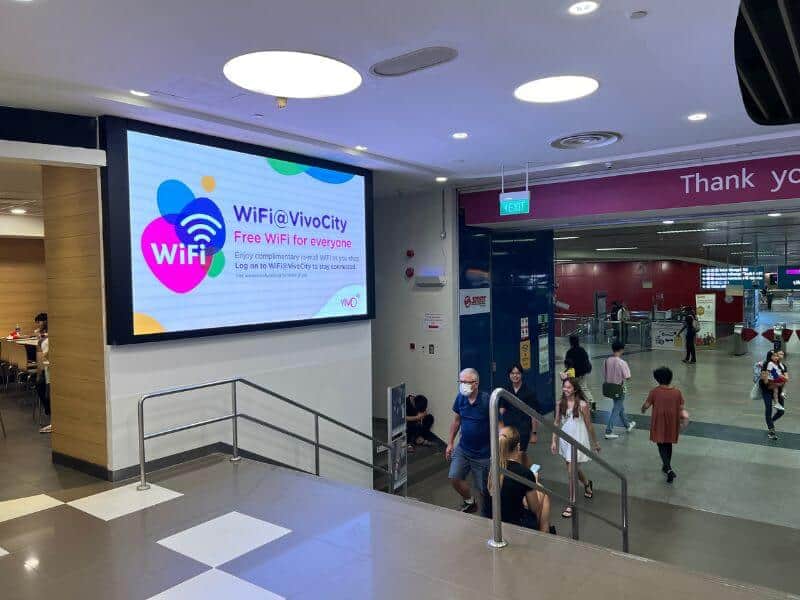
Wifi hotspot are available all over the island, including malls, airports, MRT stations, and most cafes, restaurants, and hotels. Access free Wi-Fi hot spots in the city via the Wireless@SG network. Download the Wireless@SG app and select “Setup” from the menu. You will need a foreign or local mobile phone number for the one-time pin to be sent to you.
You can also use a pocket WiFi device to access the internet from various devices. This mobile hotspot provides data access for your laptop, tablet, and/or smartphone throughout the island. This is recommended if you carry a few devices, want WiFi connectivity, and don’t plan on making many phone calls.
These are available from Changi Recommends in the airport upon arrival, or you can reserve your units online and collect from the Changi Recommends booth upon arrival.
Languages in Singapore
You will be surprised to know that most Singaporeans are proficient in the English language. English has always been taught in schools and serves as the main medium of instruction in all levels of education and in business.
Nevertheless, we possess unique intonations that may involve clipped pronunciation or the inclusion of additional words for emphasis. These added words often convey distinct meanings, thereby altering the interpretation of sentences.
Words include “lor”, “lah”, and others are used commonly. Most sentences are short and can be viewed as broken English. It is not. It is Singaporean English, or infamously called “Singlish”. It is a collection of colloquial catchphrases and lingo, highly influenced by Singapore’s multiculturalism and habits.
Some examples are… Just a few!
Don’t be so stingy lah!
Don’t play play (don’t mess around)
The food is damn shiok (delicious food)
Can chope for me or not? (Can you reserve the table for me?)
And a hilarious one… You eat yourself and I eat myself (a Singaporean telling his friend to go ahead to have his meal, and he himself will have his later).
After a few days in Singapore and among Singaporeans, you will either understand the language or be totally confused. But I believe you will feel comfortable and be right at home. It is English after all.
It is worth noting that Singlish is commonly used among Singaporeans, but when communicating with foreigners, we generally switch to more formal English.
You may find yourself speaking Singlish after your time in Singapore. Perhaps you should pick up a book on Singlish from Changi Airport. That should keep you awake on your flight home.
For the record, there are four major languages spoken in Singapore, namely English, Malay, Mandarin, and Tamil. Singapore is a multi-racial, multi language and religion society.
Money and Cost in Singapore
The local currency is the Singapore Dollar (SGD), with a denomination up to SGD10,000. Most retailers are reluctant to accept the $10,000 or even the $1,000 notes, given the risk of accepting a fake note of this value is high. So, if you are changing cash, ask for smaller notes, such as $10, $50, and $100.
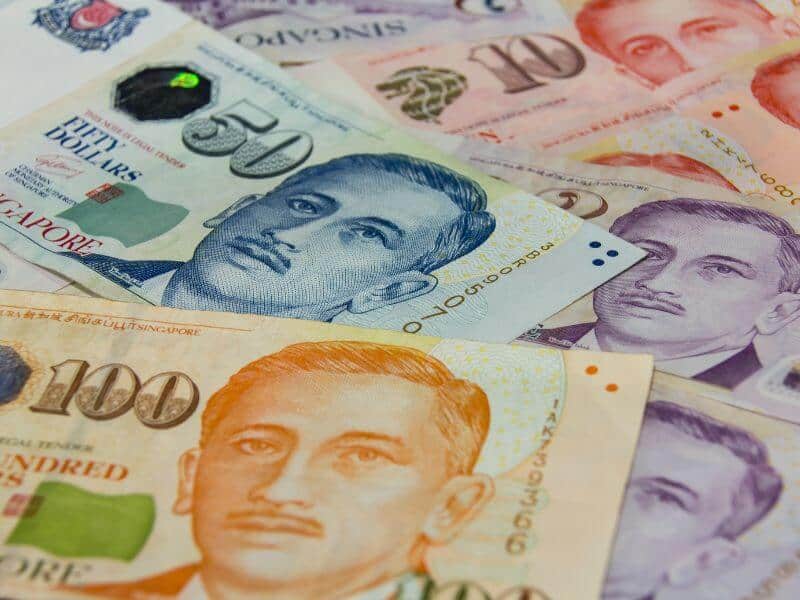
Most credit cards are widely accepted here. You can also use your Apple Pay or other online payment such as AliPay and others. To utilize public transportation, such as buses, ensure that your credit or debit cards have the PayWave feature activated.
It is also good to bring cash, as it is still essential for purchases at food/hawker centers, kopitiam, local markets, mama stores, vending machines and others. Most modern food courts now offer cashless payment options. However, in the event you are unable to use cashless payment, cash is your only alternative, unless you want to go hungry.
There are money changers in the airport, MRT stations, and almost all shopping malls. Most ATMs in Singapore accept major credit cards, such as Visa, Mastercard, and American Express, to withdraw cash.
In Singapore, 9% GST is charged to goods and services purchased. And most restaurants include a 10% service charge in the bill. Tipping is not expected in hawker centres.
How Much Do We Need to Bring to Singapore?
Singapore presents a diverse range of activities, lifestyles, and culinary delights, catering to the preferences and comforts of both travelers and locals. Singapore is not the cheapest city. But with good information, you can definitely enjoy a good stay in Singapore.
Drawing on my personal experience of living in Singapore and my interactions with travelers from various countries during my own adventures, I am pleased to share with you the average daily budget per person in Singapore. Whether you tend to spend more or less than the average, feel free to adjust accordingly.
Budget Travelers: This means local food courts with occasional cafe meals, public transport, and budget hotels.
3 meals @ $22; MRT & Bus Fares @ $7: Miscs @ $10 and hotel @ $80. Total SG$119 per day.
Regular Travelers: Local food courts and cafes/resto, public transport including Grab Car, and mid-range hotels.
3 meals @ $45; Transport @ $20; Misc @ $20, and hotel @ $200. Total SG283 per day.
Luxury Travelers: Restaurants, Private Hire cars such as Grab Car & Taxis, and Luzury hotels.
3 meals @ $100; Transport @ $50; Misc @ $50, and Hotels between $400 – $600. Total SG$600 – $800 per day.
Above assumptions do not include tours, entry to theme parks, games and other touristy activities.
To provide some context for budget travelers planning to spend a week in Singapore and engage in tourist activities like visiting Gardens by the Bay and more, a sum of SG$2,500 would likely be adequate.
Singapore Tourist Refund Scheme
The Singapore Tourist Refund Scheme (TRS) enables you to claim a refund on the 9% Goods and Services Tax (GST) paid on your purchases in Singapore. To be eligible for GST refunds, you must be an international visitor who has been in Singapore for less than 365 days and will be departing the country by air.
To claim your GST refund, you must spend at least SG$100 (including GST) on goods from the same retailer in a single day. The GST refund is not applicable to services such as accommodation or food.
Look for the Tax-Free Shopping logo at retailers, or simply ask before you buy. Inform the retailer that you are a traveler, show your passport (copies are not accepted) and e-Pass. Once the transaction is completed, keep your receipt. You can check your transaction via the eTRS Singapore app or at touristrefund.sg.
Getting Your Tax Refund
Use the eTRS self help kiosks at Changi Airport Departure Check-in Hall before departure immigration for those purchases you planned to check-in. Some purchases may be required to go to the Customs Inspection counter for verification. Check the screen instruction carefully.
For those purchases that you planned to carry on-board, apply at the eTRS self-help kiosks at the departure lounge after immigration,
For cash refund: please proceed to the Central Refund Counter located in the Departure Transit Lounge, after completing the departure immigration process, ensuring that you have your passport with you.
For credit card: once you have completed your claims at the eTRS kiosk, you may proceed for boarding. The funds will be credited to your designated credit card within ten days after a successful claim submission.
Transport in Singapore
Getting around in Singapore is really easy and affordable. Singapore has an efficient, well-connected public transportation system with extensive coverage that is efficient and safe. It makes it so easy to get around the city. To top it off, all trains, buses, and taxis are airconditioned and so cool!
Mass Rapid Transit (MRT)

Our MRT network is known for its efficiency and reliability. It is modern, clean, and connects various parts of the city. The network, with more than 140 stations, covers most tourist spots, major attractions, business districts, and residential areas. There are a total of six lines with interconnection between these lines. An unique feature is the Circle Line, which connects the other five lines in a circle run. You can just stay on the Circle line until it crosses the line you are shooting for. This means that you are just a connection away to another line.
The train operates from 5:30am to midnight daily, with extended hours during festive periods. Train frequency is 2 to 3 minutes during peak hours of 7am to 9am, and 5 to 7 minutes during off-peaks hours.
You can use a stored value card, such as the ez-Link or NETs Falshpay card to pay, or with the newer SimplyGo! card. In addition, you can use your credit card or debit card and mobile wallet for contactless payment.
Click here to view the MRT System Map online. You can also download the MyTransport.SG app to plan your journey with ease.
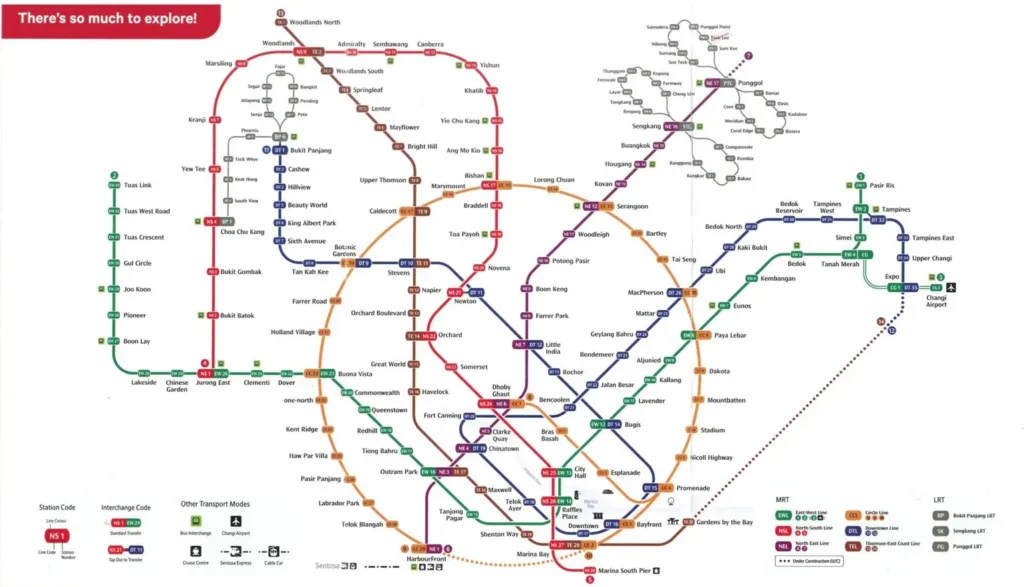
RambleTravelers Pro Tip: Download and install the MyTransport.Sg app. If you plan to travel by public transportation, this app is a life saver.
RambleTravelers Pro Tip: Use Google Maps. Google Maps uses local public transportation information to suggest the bus numbers to take, and connection to trains, with useful relevant information.
Bus Network
Buses are one of Singapore’s most convenient and accessible modes of public transport. They connect with the rail networks and bring you closer to your destination, including tourist attractions, business hubs, and also into Singapore’s heartlands.
There are five main types of Bus Services. For most travelers, you will probably use the Trunk Bus Services, Feeder Bus Services and the Shuttle Bus Services. These are available from most bus stops or bus interchanges.
Taxi and Private Hire Cars
Taxis offer not only convenient accessibility, but also affordable, albeit at a higher cost compared to MRT and bus services. They serve as a reliable mode of transportation when you require swift and efficient travel to your destination.
You can flag a taxi along the road (restrictions apply), at designated taxi stands (just about everywhere in Singapore), or book a ride anytime via mobile apps or telephone. Should you hail a taxi, the charges are based on the meter, and are calculated based on distances traveled plus any surcharges that may apply. Singapore taxi is highly regulated and controlled.
For Ride-Hailing apps, Grab is a local favorite. The services can only be booked online through their apps.
RambleTravelers Pro Tip: Download and install the Taxi & Grab apps. In any event that you need to catch a cab, you have it on your hand phone. Download from the App Store or Google Playstore. Search for CGD Zig for Taxi and Grab for ride-hailing.
What to Eat in Singapore
Singapore is a multi-cultural country. You should not be surprised at the variety of foods we have, and the foods here are beyond great. Eating is an obsession, a forgivable affair, a culture here in Singapore.
For a traveler from any part of the world, you will surely find comfort that you will not have any diet or eating constraints here. You will find the food you like and more.
The most local and affordable foods can be found in our hawker centres and food courts island wide. It is where local Singaporeans eat. Hawker centers and food courts are everywhere, serving the many types of foods to suit the palate of a nation and visitors. There are even Michelin street food in Singapore. Truly food culture in Singapore.
Some Singapore dishes and popular food in Singapore are :
- Chili Crab – Crab dish cooked in spicy chili gravy and eaten with rice and mantou (fried buns).
- Laksa – Spicy noodle soup with a dense coconut-based curry with ingredients like prawns, hard-boiled eggs, cockles, slices of fish cakes, and tofu puffs.
- Hainanese Chicken Rice – Succulent chicken meats served with fragrant rice cooked in chicken broth, chili, soy sauce and ginger paste.
- Satay – BBQ meat on skewer (bamboo sticks), marinated and grilled over a open flame, served with peanut sauce, cucumber, onions and rice cakes.
- Char Kway Teow – Stir fried flat rice noodles with eggs, slices of fish cake, bean sprouts, cockles, and Chinese sausage.
- Nasi Lemak – Aromatic rice cooked in coconut milk, served with fried or boiled eggs, ikan bilis (anchovies), peanuts, fried chicken, sambal, and cucumber slices.
- Chendol – A icy sweet dessert laden with thinly shaved ice topped off with green rice flour jellies, sweet red beans, creamy coconut milk and gula-melaka (brown palm sugar).
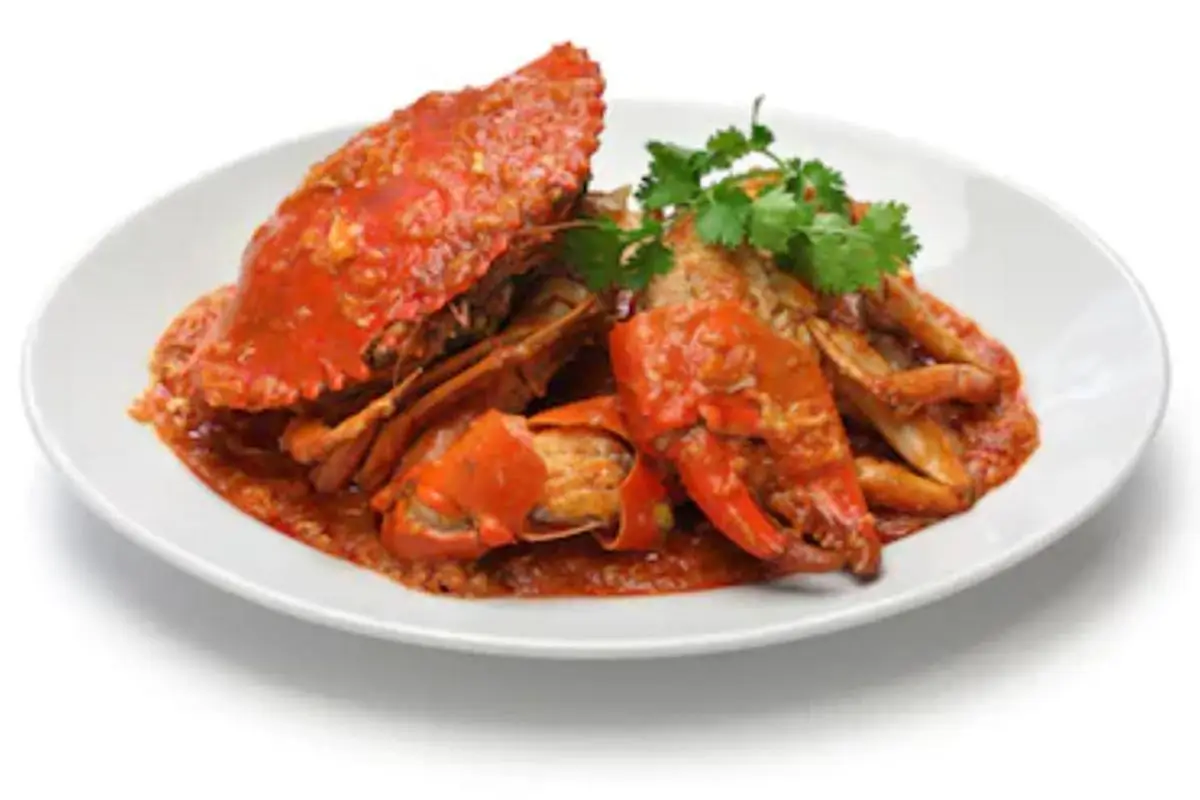
Singapore Chili Crabs
A plate of Singapore Chili Crabs, a popular Singaporean dish. The crabs are cooked in a thick, vibrant red chili sauce. It is often eaten with rice or a type of bun called mantou.
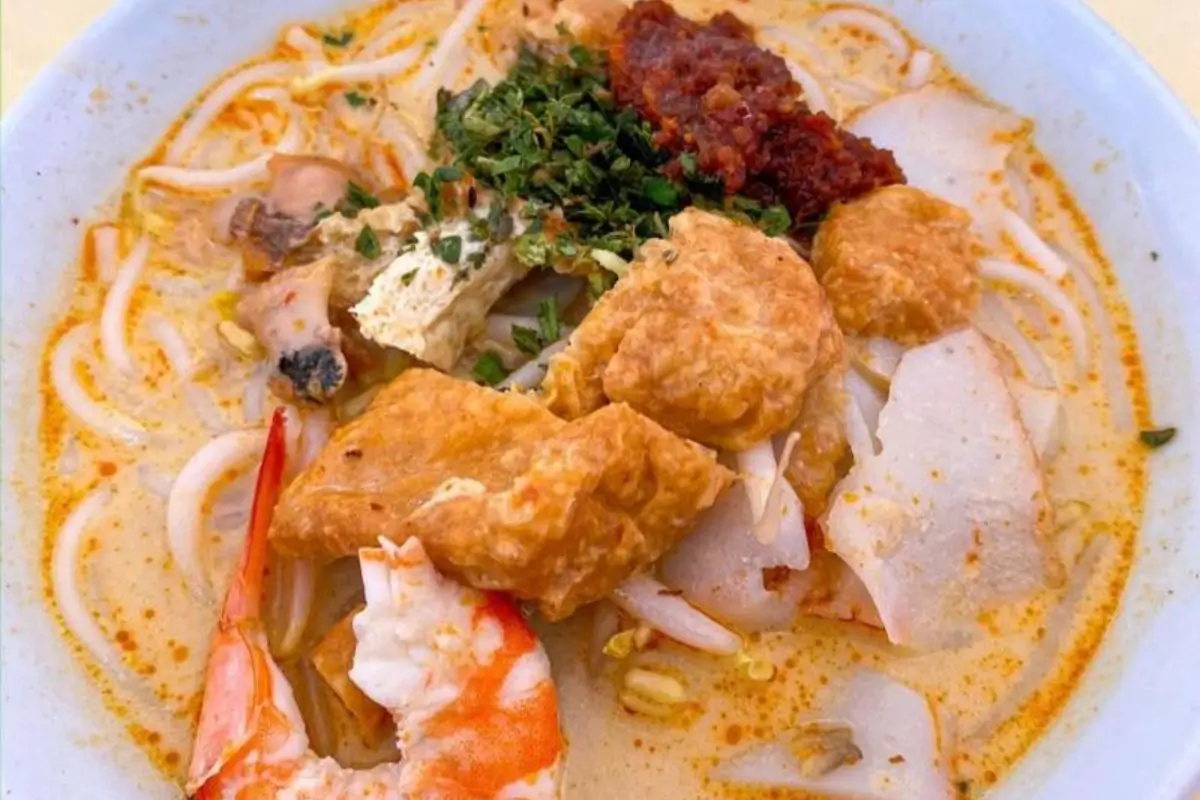
Singapore Laksa
A popular spicy noodle soup, made with a creamy coconut milk-based broth rich in chili and spices. It is loaded with ingredients such as rice noodles, shrimp, fish cakes, tofu, and bean sprouts
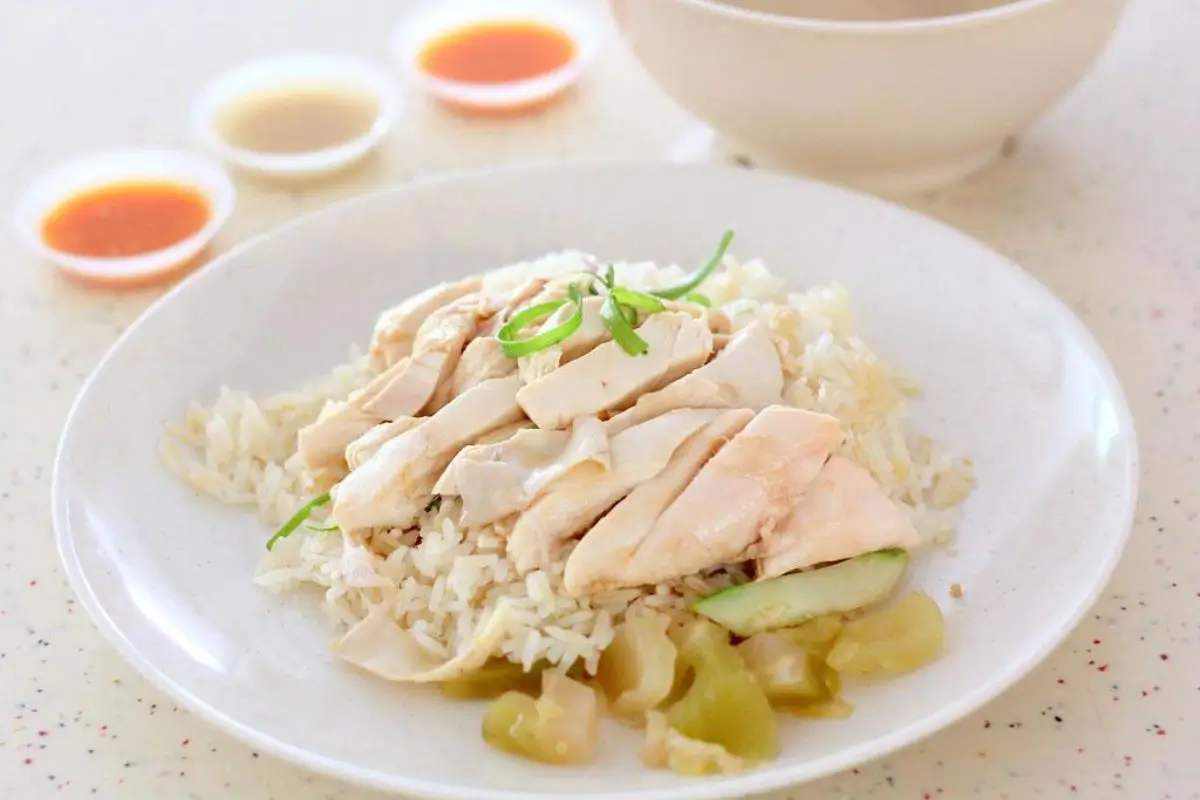
Singapore Chicken Rice
Steamed chicken served with fragrant rice cooked with shallots, ginger, and garlic. Served with pickles, cucumber slices, garlic chili sauce, ginger sauce, and black soy sauce.
Kindly ensure that you return your tray and utensils to the designated counter after your meal. Additionally, it is customary and considerate to clear up the table if any mess is made. Please note that failure to return your tray may result in a fine issued by the enforcement officers.
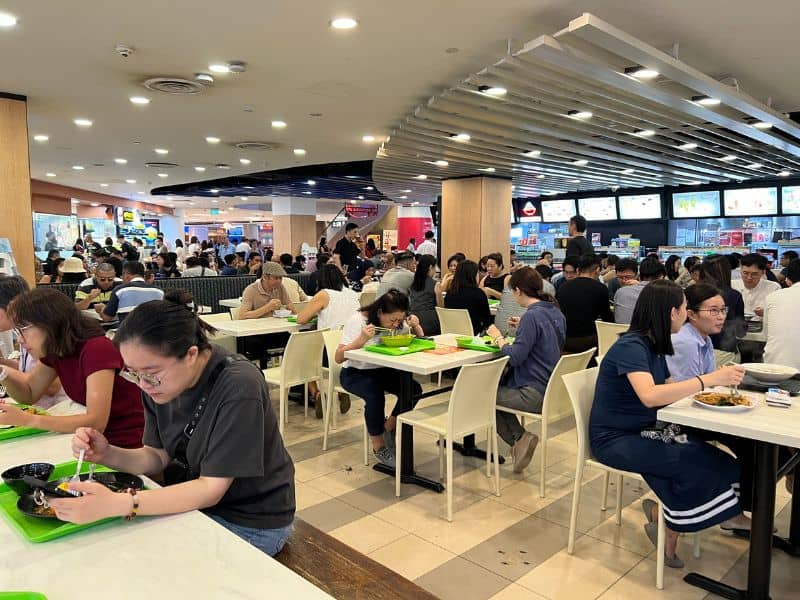
This Singapore’s hawker culture is designated as a UNESCO Intangible Cultural Heritage. Remember, you ain’t see Singapore if you have not eaten at hawker centre. It is one of the most Singaporean experiences you can have. You’ll love the food.
Cafes and restaurants are predominantly located in malls and commercial buildings. To find a suitable dining option, a simple Google search specifying the desired cuisine will unveil a plethora of restaurants along with their respective locations.
If you prefer to skip the hassle of finding the best local eats, join a guided food tour! Explore Chinatown, Little India, and Kampong Glam with a local expert, savoring authentic flavors and stories that bring Singapore’s culture to life. Book your spot now for an unforgettable foodie adventure!

RambleTravelers Pro Tip : If you are at hawker centers or kopitiams (coffee shop) and you see tissue paper packets, umbrellas, or even water bottles on empty tables, those seatings are “chope”, meaning they are reserved and taken. This saves them the seats when they return with their tray of foods. One of the queer Singaporean culture. But effective and respected.
RambleTravelers Pro Tip : To discover more on the best Singapore Street Noodles, Singapore Hawker Foods and for those with sweet tooth, traditional Singapore Desserts, click on the links. You dont want to miss out on all these simply heavanly foods while you are in Singapore.
Is Singapore Safe to Visit: Health and Safety
Singapore is renowned for its safety. The questions, ” Is Singapore Safe ” and ” Is Singapore Safe To Visit “, ” Is Singapore safe for women “are often asked. As a local Singaporean, I can answer with a definitive “Yes”.
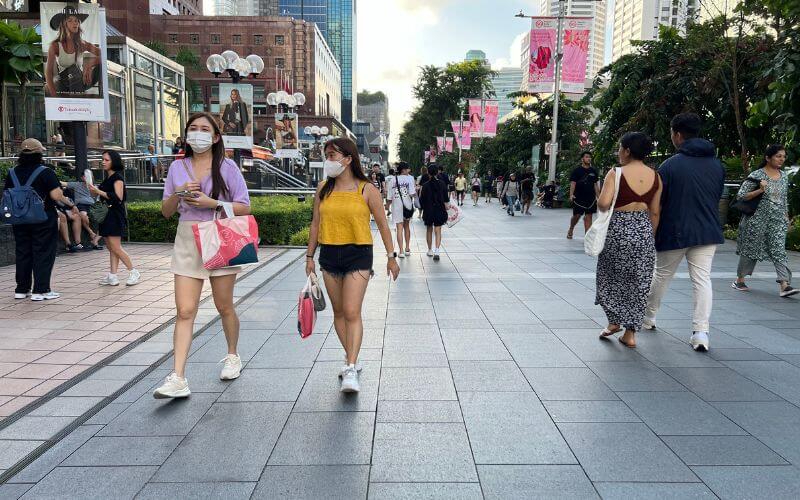
Singapore is widely regarded as one of the safest cities in the world, thanks to its strict laws and stringent penalties for crime. CCTV network monitoring is in place extensively. Consequently, criminal incidents are exceptionally rare in Singapore.
You can walk almost anywhere in Singapore, and feel safe and comfortable. You are unlikely to be attacked or robbed. However, you should never flaunt your wealth openly. Do not make yourself the target. Remain vigilant in crowded places.
Singapore’s healthcare system is world-class. Centrally located hospitals include Singapore General Hospital, National University Hospital, Raffles Hospital, Mount Elizabeth Hospital, and Gleneagles. All hospitals have 24 hours walk-in A&E departments. Pharmacies are located in all shopping malls.
Singapore has no major diseases, others than the recent Covid-19 pandemic. Tap water is safe to consume, and smoking is not allowed in most indoor public spaces. Vaping is illegal in Singapore.
RambleTravelers Pro Tip : I highly recommend purchasing a comprehensive insurance policy that covers, among other things, medical care. Healthcare expenses in Singapore can be significant, so it’s important to protect yourself with proper coverage.
An affordable travel insurance option is available through SafetyWing. Their comprehensive plan includes coverage for medical treatment, hospitalization, evacuation, trip delays, lost checked luggage, and more.
Understanding Singapore’ Cultures
Singapore is a melting pot of cultures and tradition. Singapore’s rich tapestry of local customs and cultures is a harmonious blend of diverse ethnic influences, encompassing Chinese, Malay, Indian, and various others. It has evolved over the years, and the Singapore culture is truly unique and fun. Some examples to prep you on the Sinagporean styles.
So, read the items listed below .. What not to do in Singapore as a tourist?
- Singaporeans are disciplined, and we queue orderly if there is more than one person waiting for their turn.
- Take off your shoes before entering anyone’s house. Believe me, their house is cleaner than your shoes.
- We keep to the left when going up or down the escalator. This is to allow someone in a hurry to pass you on the right.
- Probably the only place in the world where we use packets of tissues to “chope” (reserve) the empty table, especially in Hawker centres. Some use umbrellas or water bottles. It is a respected gesture and no one will dispute your “chope”.
- If you eat with chopsticks, never stick them upright in the bowl. It is similar to funeral rites, and some said you are offending the dead. Don’t even think of trying it.
- Ordering a cup of coffee in Singapore is more a science than an art. Go on, try ordering a cup of coffee at hawker centres or Kopitiam. There is “Kopi”, “Kopi-C”, “Kopi-O”, “Kopi-Gao”, “Kopi Siew-Dai” and more.
- Singapore has many places where eateries are open 24 hours. Whenever you are in the mood to eat, there may be some joints around the corner to serve you your comfort food.
- It is rude to point at someone with your finger. Use your hand to wave.
- Singapore is clean, one of the cleanest in the world. Singaporean works hard to keep the country neat and clean.
- You are required to flush the public toilet after use.
And many many more. You will experience all these during your travel in Singapore.
RambleTravelers Pro Tip : I have learned from experience never to question the behavior and culture of the people I meet in my travels. Typically, I will note it in my notebook as a collection of cultures and customs, and someday, I may too exhibit similar behavior. It is always worth a good laugh.
Singapore Laws tourists should know
It’s key to know Singapore’s unique laws to avoid any surprises. Singapore is famous for being super clean and safe, partly thanks to its strict rules. Allow me, as a local, to provide you with a concise overview of the essential laws in Singapore. While some may appear trivial, familiarizing yourself with these regulations will ensure a seamless and delightful trip.
Read these items listed below too .. things not to do in singapore! These are against the law.
- Smoking in public places is prohibited. Vaping is illegal.
- Chewing gum is prohibited in Singapore, except on medical ground.
- Airbnb rentals are illegal for most Singaporean properties.
I understand the limitations on Airbnb in Singapore can be frustrating. If you’d prefer staying in a hostel over a hotel, there are plenty of excellent options to explore. I have stayed in hostel such as YMCA and it is a great way to make new friends while traveling.
You can search for great hostels in here. - You are not allowed to purchase or consume alcohol between 10:30pm and 07:00am in public.
- Jaywalking is prohibited, and you have to cross the street at the designated area or when the crossing light is green.
- Litter and spitting in public places is prohibited.
- Drugs are strictly prohibited. Drug possession, usage, and the trafficking of it can result in harsh penalties.
- Outraging of modesty, being drunk or disorderly in public, is an offense and subject to strict penalties.
- Using a phone while driving is prohibited.
- Taking photos of people without their permission is forbidden.
- Eating on Buses and Trains is forbidden.
- You are required to flush the toilet.
These laws and the strict enforcement of them are meant to protect both Singaporeans and visitors alike. It’s this shared sense of responsibility that safeguards the country’s unstained public spaces and fosters a sense of security that is hard to match anywhere else in the world.
Wrapping Up – Things To Know Before Visiting Singapore
Thank you for taking the time to read this guide to Singapore. I hope it has given you some insight into the Lion City and what makes it so special. From its vibrant culture, strict laws, and world-class healthcare system, there is no doubt that Singapore has something unique to offer every traveler.
I hope this guide with the 15 things to know before visiting Singapore is helpful in preparing you for your trip to Singapore. It is a long read but necessary. I have omitted information on hotels, accommodations, things to do, and where to eat. I believed that if you get it right in prepping and know enough what to do or don’t do, the rest of the arrangements will be easier.
Let’s get you into Singapore for your real experience of The Lion City. Pack your bags, hop on a plane, and start exploring.
Remember to always be respectful and follow the laws and customs. Happy travels!
RambleTravelers ProTip : Don’t forget to try out the local food while you’re here. It’s an essential part of experiencing Singapore. From hawker centers to fine dining, there’s something for everyone. And if you need any recommendations, don’t hesitate to ask a local! We love talking about food and sharing our favorites.
Welcome To Singapore

For more travel resources click to view resources that will be helpful to you.