Ramble Travelers contains affiliate links and is a member of the Amazon Services LLC Associate Program and other affiliate programs. If you make a purchase using one of these links, I may receive compensation at no additional cost to you. See my Disclaimer Policy for more information.
Preventing Plantar Fasciitis: 5 Essential Tips for Pain-Free Travel
Exploring new destinations on foot is one of the best ways to truly experience a place, but for travelers prone to plantar fasciitis, this can quickly turn into a painful experience.
As an avid traveler and outdoor enthusiast who has experienced the challenge of foot pain firsthand, I’ve learned how to prevent plantar fasciitis from getting in the way of adventures.
In this guide, please allow me to share working strategies on how to protect your feet, choose the right footwear, incorporating stretches, with recovery tips, and staying pain-free during long days of walking. This is all about preventing plantar Fasciitis.
Whether you’re planning a city tour or a hike in the wilderness, these tips will ensure your travels remain enjoyable and pain-free, without sacrificing comfort, so you can focus on enjoying your travels to the fullest.
As a fellow traveler, I hope you experience many pain-free journeys and fully savor every adventure.
Disclaimers

This post serves as a guide and is not a substitute for medical advice. It is based on my personal experiences and those of fellow travelers I’ve encountered on the trails. If you have a pre-existing condition or are experiencing severe foot pain, please consult a healthcare professional before engaging in any travel activities.

Preventing Plantar Fasciitis While Travelling
If you’re not familiar with plantar fasciitis, its symptoms, the pain it causes, and the available options for those affected by this challenging condition, click here to learn more so you can be better informed before continuing to read.
Planning Your Itinerary
This is often overlooked amid the common tendency to plan zealously, aiming to see as much as possible, explore as if there is no tomorrow, or simply justify the trip with hard-earned savings.
I have fallen into this habit more times than I can count, often facing the consequences of plantar fasciitis and knee pain, particularly during trips that involve extensive walking or hiking.
Pacing yourself is key. When planning your travel itinerary, incorporate rest periods between tours or hikes. Mix in low-impact activities like museum visits or leisurely strolls.
Take the time to enjoy coffee breaks or simply relax in the park surrounded by blooming roses.

Choose accommodations with easy-to-access amenities can further reduce unnecessary foot strain.
Don’t be a hero, there are always opportunities to see more on another trip.
Choose the Right Footwear for Support and Comfort
Wearing proper footwear is the foundation of preventing plantar fasciitis. The right footwear can make a large impact on easing your pain and aids in the recovery process.
My Story ...

Over the years, I've worn shoes—primarily sneakers and walking shoes—that not only looked stylish but also provided excellent cushioning and added inches to my height. My work shoes were all pointed-toe and high-heeled styles.

I had no idea that all these factors were contributing to my heel problem. It was during a trip to Germany that the pain intensified, completely overshadowing the experience. The discomfort was so severe that I could hardly walk, only managing to sit down and dread the thought of standing up again. If this is not a wake up call, I really dont know what it is!

Since then, I have consulted numerous doctors and physiotherapists, undergoing various treatments, including shockwave and ultrasound therapies, massage, taping, stretching, and other Traditional Chinese Medicine (TCM) techniques.

Despite some improvements, the persistent pain of plantar fasciitis continues to be a challenge, with frequent flare-ups that are often painful. Through this difficult experience, I have gained valuable insights into this troublesome condition.
It’s crucial to understand that if you’re experiencing plantar fasciitis, some level of cushioning support is necessary to alleviate the pain. However, relying too heavily on this cushioning may lead to dependency, which could be counterproductive.
Here, I will share criterias to consider that will enhance recovery, prevent plantar fasciitis, and alleviate any pain you may be experiencing. Wearing proper footwear can help support your feet and prevent further damage to the plantar fascia ligament.

- The first consideration is to make sure your shoe can accomodate your toes. Shoes should allow your toes to spread naturally. Opt for footwear that is widest at the toe box and permits normal splaying of your toes for optimal comfort.
Allowing your toes to splay naturally enables your foot to function properly, helping to prevent the weakening of both foot and arch muscles.
Forget about those cute looking shoes with pointed or narrow toe box. Go for the wide toe box. It may not look as good as those narrow toe box, but it will do wonder for your plantar fasciitis. - The second consideration is ensuring that the heel remains level. This means there should be no height difference between the heel and the forefoot.
Maintaining this alignment allows your foot to distribute your body weight evenly, preventing stress on the forefoot.
The term used to describe this criteria is Zero Drop. Now forget those fanciful heel and shoes with the cute step. - Cushioning: as I have mentioned above, if you are currently suffering from plantar fasciitis, it is better to have some degree of cushioning to help to alleviate the pain.
As your pain reduces, you can switch to shoes with lower cushion or even those barefoot shoes as it will allow your foot to function naturally.
The term used to describe this criteria is Stack Height. Try not to use shoe with stack height greater than 28mm.
Throughout my challenging journey with plantar fasciitis, I have tried numerous shoes, including specialized options specifically designed to relieve pain associated with the condition, some of which were quite extravagant from Switzerland.
After all these trials and errors, I have found that the first two criteria mentioned earlier significantly contributed to my improvements in managing plantar fasciitis. These two criteria contribute largely to the best plantar fasciitis shoes.
Ramble Travelers Pro Tip: Consider bringing a second pair of shoes to alternate throughout your trip, as this can help relieve pressure points on your feet. Ensure that the shoes you bring are well broken in.
Plantar Fasciitis Socks

It is always prudent to wear socks when on the move, particularly those with padding that provide additional cushioning. However, wearing the wrong socks is more harmful than good.
Socks can restrict toe movement, especially in cases of toe cramping. By squeezing the toes together, they hinder proper foot function and may contribute to conditions like plantar fasciitis.
Also socks that offer compression can help in muscle recovery.
Two key criterias to consider:
- Socks that do not constrict your toes, like toe socks or open-toe socks, are excellent choices for individuals dealing with Plantar Fasciitis.
- Slight compression can help alleviate pain associated with Plantar Fasciitis, but it may not address the underlying issue.
Therefore, avoid wearing socks with tight compression as it can affect the normal functioning of your feet, hence use them only when necessary.
Ramble Travelers Pero Tip: If you plan to wear socks designed to relieve pain from plantar fasciitis, or thicker socks intended for winter, it’s important to take this into account when sizing your shoes.
Stretching Before and After Your Travels
Important: You are responsible for performing all exercises within your personal limits. If you experience any pain or discomfort while exercising, please stop immediately and consult your doctor or therapist.
If you are looking for sources on where to acquire the proper Plantar Fasciitis relief kit Click here to check out this resources for Plantar Fasciitis.
Along with proper footwear, incorporating stretching into your daily routine can also help prevent plantar fasciitis pain. Stretching helps to strengthen the muscles in your feet and improve flexibility, reducing the risk of injury
Before embarking on any physical activities, such as hiking or exploring a city on foot, take some time to stretch out. This is crucial in preventing plantar fasciitis from flaring up.
Basically, I focus on the following stretchings to reduce my plantar fasciitis pain and for a almost painfree walking experiences most of the times.
All of these stretches require no equipment, except for the last exercise, which necessitates a golf or tennis ball. Be sure to pack one in your luggage, or in a pinch, you can use a cold water bottle to roll.

Calf Muscles: Stretching your calf muscles is crucial for managing plantar fasciitis, as tightness in this area can restrict movement and affect ankle function.
To perform the stretch, stand in a walking position with the leg you want to stretch extended straight behind you, while bending the other leg in front.
Use a chair or wall for support, then lean forward and down until you feel a stretch in the calf of your extended leg. Hold the position for approximately 30 seconds and repeat 3 times.
If you prefer, you can do this exercise while seated. Simply loop a towel or strap around the ball of your foot and gently pull the towel towards you, keeping your knee straight. Hold this position for 30 seconds and repeat three times.
Peroneus Muscles: These muscles play a significant role in plantar fasciitis. Assuming the same position as the earlier exercise, bend the knee of the stretched leg behind you while keeping your front leg bent.
Lower yourself until you feel a stretch in the peroneus muscles, located just above your heel. Hold this position for 20 seconds and repeat 3 times.

Plantar Fascia Stretch: While sitting cross legged, move your ankle up and pull your toes up. You should feel the stretch at the sole at the sole of your feel (where the plantar fascia are).
Hold the stretch for 20 seconds and repeat for a total of 3 sets.
Eccentric Achilles Loading: Begin by standing on a step (or roll up a towel and position it under your toes) with both knees straight. Rise onto your toes, then lift your unaffected leg and hold the position for 2 seconds.
Next, using your affected leg, slowly lower your heel over the edge of the step or towel. Aim to complete two sets of 15 repetitions. Use a chair or wall for support.
This exercise effectively stretches your hamstring, calf muscle, and plantar fascia.
Towel Grabs: Lay a towel on the floor. Use your toe to flex and grab the towel, pulling the towel towards you. Repeat this two sets of 15 times.
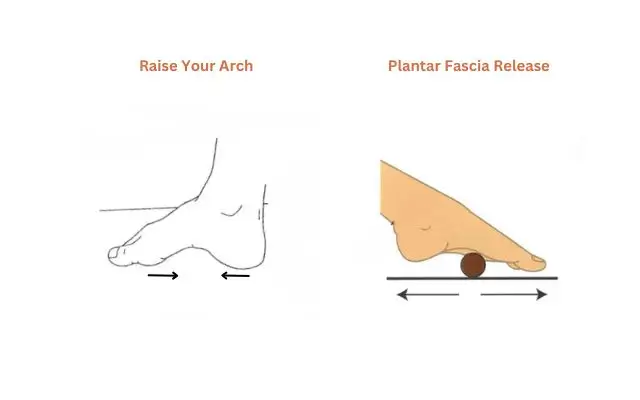
Raise Your Arch: Sit on a chair with your foot on the floor. Shorten your foot by tightening the muscles on the sole of your foot (basically bringing the ball of your foot toward your heel).
You should feel the contraction of your foot muscles.
Hold for 5 seconds. Repeat 15 times.
This exercise strengthen your foot muscle and raise your arch.
Plantar Fascia Release: Sit comfortably in a chair and gently press your affected foot onto a tennis or golf ball. Roll the ball under the arch of your foot for 3 minutes, avoiding the heel where the pain is concentrated.
This exercise helps to loosen the plantar fascia, mobilize the tissue, and enhance blood flow to the affected area. It also releases fascial adhesions, alleviates pain, and promotes healing of the fascia.
These seven exercises can easily be performed in your hotel room while traveling. Aim to complete them at least twice a day: once before heading out for your day’s adventures and again after all your walking is done.
The total exercises will take about 10-15 mins. If you are in a hurry, try to complete the first 4 exercises.
During Your Trip
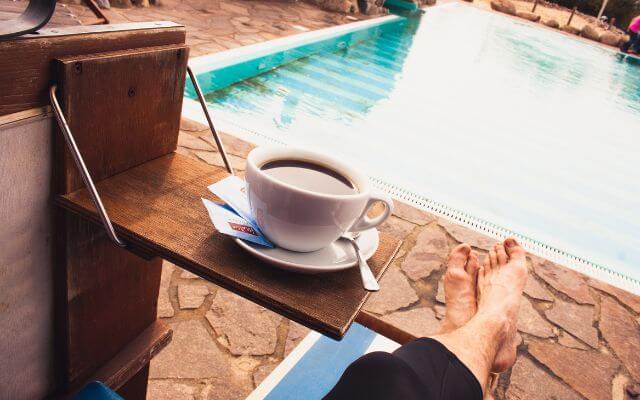
- Exploring a new destination often means lots of walking. While staying active is great, remember to take regular breaks to let your feet recover. Sitting for a few minutes every hour or so can prevent undue strain.
- Hydration: IIt is essential to maintain proper hydration, particularly in hot and humid conditions. Adequate water intake can help alleviate inflammation and stiffness in the feet.
- Pay attention to your footwear and consider changing shoes halfway through the day to give your feet a break. I often pack a second pair of walking shoes in my day backpack.
- Speaking of backpacks, it’s wise to remove any items you likely won’t use during your day trip to keep your load as light as possible. Every extra ounce adds stress to your knees and feet.
- Use of night splint: While you sleep, night splints maintain your feet at a 90-degree angle, preventing the plantar fascia from contracting and stiffening throughout the night. This is the primary reason for morning heel pain.
- Lastly, if you do experience any pain or discomfort during your travels, don’t hesitate to rest and take it easy for a bit. You can perform some stretching such as Plantar Fascia Stretch, even in the cafe.

Your health is more important than pushing yourself too hard on vacation.
With proper care and attention to stretching and exercise, you can enjoy your travels pain-free and truly appreciate all the amazing places you visit.
End of Journey

Travel doesn’t have to mean foot pain. By understanding plantar fasciitis and taking proactive steps to prevent it, you can keep your adventures enjoyable and pain-free.
From choosing the right footwear to adopting regular stretching routines, these small actions can make a world of difference.
If you are in pain after your trip despite all that you have done to alleviate the pain, it is time to consult a healthcare provider. Chronic pain, swelling, or severe discomfort are signals that professional intervention might be necessary.
Never ignore persistent foot problems; early intervention can prevent more serious complications down the line.
Remember, healthy feet are happy feet, so make them a priority in your travel plans!
FAQ
Should I limit walking with plantar fasciitis?
It is important to rest your foot as much as possible by avoiding running, excessive walking, and prolonged standing. However, please ensure you perform the specific exercises listed in this article.
How do you prevent plantar fasciitis in the morning?
Utilize a Sock Splint During Sleep.
Sock Night Splints are specifically engineered to maintain the plantar fascia in a stretched position overnight, thereby reducing morning tightness.
Can sitting too much cause plantar fasciitis?
Prolonged sitting in this position can shorten muscles, causing tightness in the Achilles tendon and plantar fascia. Patients often report sharp pain in the heel’s underside when standing after sitting.
Although the discomfort usually eases with movement, it tends to return once they sit down again.
Can plantar fasciitis cause knee pain?
The plantar fascia is linked to various components of the lower body, particularly the knee.
Consequently, when the plantar fascia becomes inflamed, it can lead to tension and strain on the knee joint, as well as the surrounding muscles and tendons, resulting in knee pain and additional symptoms.
Can Plantar Fasciitis Cause Ankle Pain?
Yes, individuals may experience ankle pain as a result of Plantar Fasciitis due to an altered gait pattern while walking or running.
Gait refers to how a person moves during activities, and an altered gait pattern indicates a change in movement, often due to foot pain from plantar fasciitis.
These changes can lead to ankle joint pain from increased tension on the muscles and tendons around the ankle or added stress on the joint itself.
Additionally, an altered gait can cause more wear and tear on the ankle structures, potentially leading to inflammation, pain, and reduced range of motion.
Can I wear heels with plantar fasciitis?
The answer is no. Wearing these shoes can contribute to foot problems over time.
Consistently using high heels can elevate the risk of developing plantar fasciitis, as they distribute weight unevenly and lack adequate support for the feet.
Resources
If you are looking for sources on where to acquire the proper Plantar Fasciitis relief kit and other exercises equipments and gears, I have a short recomendation in the Resources Page that you an rely on. Click here to check out this resources for Plantar Fasciitis.
Understanding Plantar Fasciitis
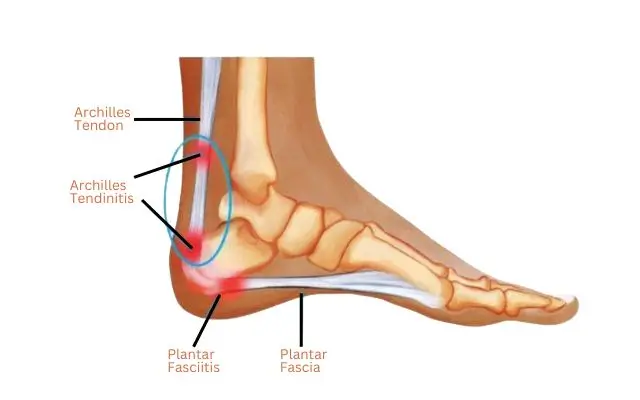
Plantar fasciitis is a repetitive stress injury affecting the plantar fascia, a connective tissue band that supports the longitudinal arch of the foot. Continuous trauma to this structure results in disorganized tissue healing, leading to pain in the heel and the plantar area of the foot.
The plantar fascia is a thick, fibrous band of tissue that runs along the bottom of the foot. It begins at the inner aspect of the heel bone and extends to the forefoot, connecting at the base of the toes.
Its primary function is to stabilize the arch, absorb shock with each step, and provide energy for every rebound.
One of the most noticeable symptoms of Plantar Fasciitis occurs when you take your first step out of bed in the morning, often accompanied by intense pain that makes you wince.
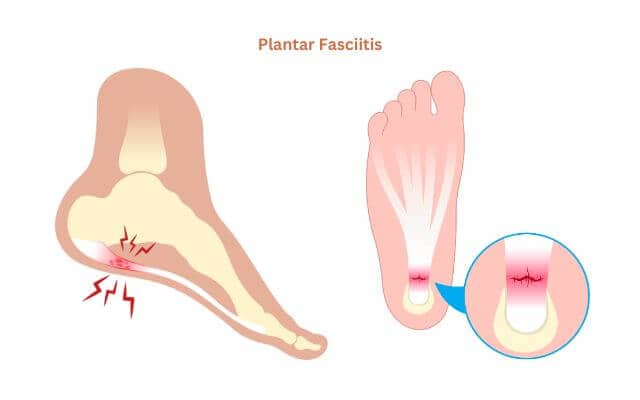
Characteristics of Plantar Fasciitis
- Pain at the bottom of foot, typically near or in the heel.
- You may experience severe pain with your first steps after sitting or sleeping, but the discomfort tends to diminish as you continue to walk.
- Pain tends to intensify with prolonged standing, making it nearly impossible to remain upright as the discomfort escalates.
Common Causes of Plantar Fascillis
- Increased physical activity that placed too much stress on the foot and heel. This is typical of sports such as running or hiking, or in jobs that requires standing for extended hours.
This overuse of the foot is probably the key contributor to plantar fasciitis. - Wearing wrong footwears such as those with small toe box or high heel that places stress on the plantar fascia.
- Tight calf muscles can lead to restricted ankle movement, often resulting from inadequate exercises, reduced mobility, or prolonged periods of sitting at a desk.
- Weak muscles in the foot from lack or insuffiecient exercises, including the calf, peroneal muscles, quad, arch of the foot, and others.
Treatment and Therapies
- Rest and ice: Take a break from any high-impact activities and apply ice to the affected area for 15-20 minutes, several times a day.
- Stretching exercises: As discussed earlier, various stretching exercises can help alleviate pain and promote healing of the plantar fascia.
- Footwear modifications: Choose shoes with good arch support and cushioning to reduce stress on the plantar fascia. Avoid high heels and shoes with small toe box.
- Night splints: These devices are worn while sleeping to keep your foot in a flexed position, helping to stretch and lengthen the plantar fascia overnight.
- Orthotic inserts or custom-made orthotics: These are placed inside your shoes to provide extra support and cushioning for the foot.
- Physical therapy: A trained physical therapist can help develop a specialized exercise program tailored to your needs and condition.
- Ultrasonic tissue repair. This minimally invasive technology uses ultrasound imaging to guide a needle-like probe into damaged plantar fascia tissue. The probe tip vibrates rapidly to break up the tissue, which is then suctioned out.
- Shock wave therapy: This non-invasive treatment uses sound waves to stimulate blood flow and promote healing in the affected area.
- Injections: Administering steroid medication into the affected area can offer temporary relief from pain.
- Surgery: It is generally an option only when the pain is serious and other treatments have failed. It can be done as an open procedure or through a small incision with local anesthesia.
Remember, every individual is different, so it’s essential to consult a healthcare professional for proper diagnosis and treatment plan for your specific case of plantar fasciitis.
With proper care and management, you can overcome this common foot problem and continue enjoying your travels without any pain or discomfort. So don’t let plantar fasciitis hold you back from
To read more about Plantar Fasciitis diagnosis, treatment, therapies and surgical or other procedures from Mayo Clinic, click on the links below:
Mayo Clinic Plantar Fasciitis – Symptoms and Causes
Mayo Clinic Plantar Fasciitis – Disgnosis and Treatments
Back To Preventing Plantar Fasciitis While Travelling

Wander Freely .. Travel Fearlessly .. Pain Free